
How Sensory-Friendly Wellness Clinics Are Changing Healthcare Experiences for Neurodivergent Families
The Centers for Disease Control and Prevention (CDC) estimates that autism spectrum disorder affects 1 in 36 children in the United States, a figure that continues to shape conversations around accessibility in schools, public spaces, and healthcare systems. For many neurodivergent families, routine medical appointments can become emotionally exhausting experiences because traditional clinic environments often create sensory overload, communication stress, and uncertainty.
Healthcare researchers and patient advocates have increasingly pointed to the importance of calm, adaptable care settings that recognize sensory differences. Some integrative wellness providers, including SeeBeyond Medicine Riverside, reflect a growing interest in patient-centered environments that prioritize comfort, communication flexibility, and individualized support for families navigating autism-related healthcare challenges.
Why Traditional Clinical Settings Can Feel Overwhelming
Bright fluorescent lights, crowded waiting rooms, loud televisions, unpredictable schedules, and rushed conversations are common features in many healthcare offices. While these elements may seem manageable to some patients, they can create intense stress for neurodivergent individuals, especially children with autism, ADHD, sensory processing differences, or anxiety-related conditions.
Research published by Autism Speaks and the American Academy of Pediatrics notes that sensory sensitivities often affect how autistic individuals experience sound, touch, light, smell, and movement. A buzzing light fixture or the sudden sound of medical equipment may trigger distress that makes appointments harder to complete.
Parents frequently describe the challenge of preparing children for unfamiliar healthcare visits. Even routine checkups may involve long waiting periods, unexpected physical contact, or rapid verbal instructions. When stress levels rise, communication can become more difficult for both patients and caregivers.
These experiences sometimes lead families to delay preventive care, avoid follow-up appointments, or seek alternative care environments that feel safer and more predictable.
Sensory and Communication Barriers in Healthcare
Sensory barriers are only one part of the issue. Communication styles within traditional healthcare systems can also create obstacles for neurodivergent patients and their families.
Data from the National Institutes of Health (NIH) suggests that autistic patients often experience healthcare disparities because providers may not fully understand diverse communication needs. Some patients communicate verbally but require additional processing time. Others may rely on visual supports, written prompts, gestures, or caregiver interpretation.
Fast-paced appointments can unintentionally increase anxiety. Families may feel pressured to explain complex behaviors quickly while also managing emotional regulation challenges in stressful environments.
Several recurring barriers appear in patient feedback studies:
- Limited appointment flexibility
- Overstimulating waiting areas
- Lack of sensory accommodations
- Insufficient provider training on autism and neurodiversity
- Difficulty coordinating multidisciplinary care
- Minimal preparation resources before appointments
These concerns affect both children and adults. Neurodivergent adults often report feeling misunderstood during medical visits, especially when providers interpret differences in eye contact, speech patterns, or emotional expression incorrectly.
How Wellness Clinics Are Adapting Their Environments
In response to these concerns, some integrative and sensory-aware healthcare spaces have started redesigning the patient experience from the moment families enter the building.
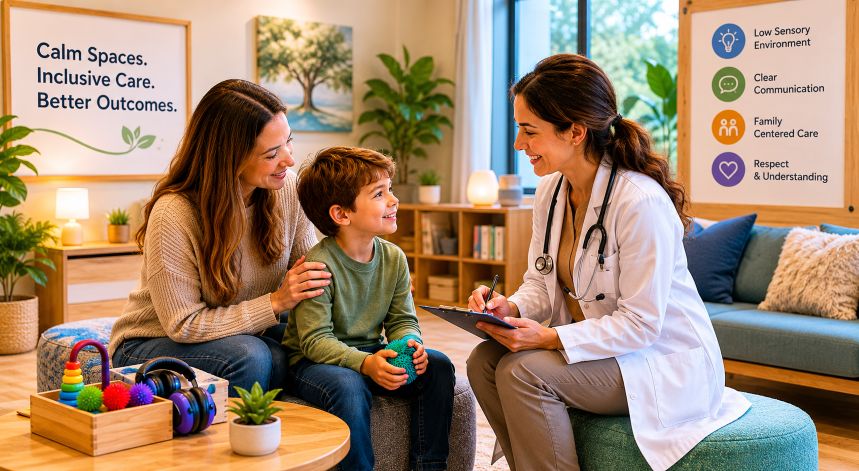
Experts from the Organization for Autism Research note that environmental predictability can significantly reduce stress for autistic individuals. As a result, many wellness clinics now incorporate quieter reception areas, softer lighting, reduced visual clutter, and calmer room layouts.
Simple environmental adjustments can make a meaningful difference:
- Dimmed or natural lighting instead of harsh fluorescent bulbs
- Lower background noise levels
- Private waiting spaces
- Visual schedules or appointment guides
- Longer appointment times
- Sensory tools such as weighted lap pads or fidget objects
- Clear explanations before physical examinations
Communication adaptations are becoming more common as well. Some providers send pre-visit forms asking families about sensory triggers, preferred communication methods, or calming strategies. Others allow parents to share videos or written notes before appointments to reduce pressure during the visit itself.
Integrative wellness clinics often emphasize collaborative care models, where practitioners from multiple disciplines work together to understand the broader needs of a patient rather than focusing narrowly on isolated symptoms.
This approach may include nutritional guidance, behavioral support referrals, mental wellness resources, stress management techniques, or family-centered treatment planning. While these models vary widely between clinics, the broader goal is often the same: creating healthcare environments that feel more manageable and less intimidating.
Parent Perspectives on Accessibility and Trust
For many caregivers, accessibility extends beyond physical design. Trust and emotional safety play major roles in determining whether healthcare experiences feel supportive.
Parent surveys conducted by The Autism Society indicate that families often value providers who listen carefully, avoid judgment, and remain flexible when appointments do not go exactly as planned.
Some caregivers report feeling dismissed in traditional healthcare settings when discussing sensory challenges or developmental concerns. Others describe frustration when providers interpret distress behaviors as noncompliance rather than signs of overwhelm.
Clinics that use slower pacing and family-centered communication may help reduce those tensions. A provider who explains each step calmly, offers transition warnings, or adjusts expectations during moments of distress can significantly change how a family experiences medical care.
Accessibility also includes practical considerations. Flexible scheduling, telehealth options, digital intake forms, and coordinated referrals can reduce the logistical burden families often face while managing multiple therapies, school responsibilities, and medical appointments.
Healthcare accessibility becomes especially important for families living in areas with limited autism-informed services. In some communities, parents travel long distances to find providers who understand sensory and communication differences.
The Broader Impact on Autism-Inclusive Care
The rise of sensory-friendly wellness spaces reflects broader conversations about inclusion across healthcare systems. While no single clinic model solves every challenge, awareness around neurodivergent healthcare experiences has grown steadily over the past decade. This broader shift also mirrors the growing awareness of neurodiversity support in healthcare, particularly in discussions surrounding patient dignity, communication flexibility, and accessible care design.
The World Health Organization (WHO) has emphasized the importance of equitable healthcare access for individuals with developmental and neurological differences. Many experts believe healthcare systems will continue evolving toward more adaptable and patient-responsive environments.
Several larger hospitals and pediatric centers have already introduced autism-friendly initiatives that include staff training programs, sensory maps, quiet rooms, and modified emergency care procedures.
These changes may benefit more than neurodivergent patients alone. Calmer healthcare spaces can also support individuals with anxiety disorders, PTSD, dementia, chronic pain conditions, or sensory sensitivities unrelated to autism.
The conversation has gradually shifted from asking neurodivergent patients to adapt entirely to clinical systems toward exploring how healthcare systems themselves can become more flexible and humane.
That shift represents a broader understanding of accessibility. Effective healthcare is not only about medical expertise. It also depends on whether patients feel safe enough to participate fully in their care.
As sensory-aware wellness models continue developing, healthcare providers, architects, researchers, and families will likely keep shaping new approaches to inclusive care environments. The growing emphasis on communication flexibility, environmental comfort, and individualized support suggests that accessibility is becoming a more central part of modern healthcare design rather than an optional accommodation.
Conclusion
Neurodivergent families often face barriers in healthcare environments that were not originally designed with sensory and communication differences in mind. Bright lighting, unpredictable routines, rushed interactions, and overstimulating spaces can make even basic medical appointments stressful.
Sensory-friendly wellness clinics and integrative healthcare spaces are helping reshape that experience through quieter environments, flexible communication methods, and more patient-centered care models. Research from organizations focused on autism and developmental health continues to highlight the value of predictable, accessible, and supportive healthcare settings.
While challenges remain, the growing focus on autism-inclusive healthcare reflects a larger shift toward environments that recognize different ways people experience the world. For many families, that shift can influence trust, comfort, and long-term engagement with healthcare systems in meaningful ways.