
Some autistic individuals may find bright light and loud noise to be a problem, as well as being in a crowded environment. These experiences can cause stress or fatigue, or concentration problems.
Creating Predictable Designs
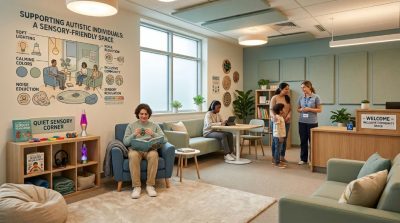 Knowing what to expect helps to keep their emotions in check and lowers uncertainty. Organized spaces, clear layout, and visual cues can help with navigation. This can foster more confidence and independence.
Audrey’s Award-winning Series on Child’s Local Experiences
Sensory retreat areas where one can have opportunities for rest and self-regulation. There may be relaxation facilities such as soft lighting and comfortable seating areas. Availability of a quiet place will increase involvement in activities and events.
CITP: Community Inclusion through Thoughtful Planning
More and more attention is paid to the design of sensory-friendly places by schools, offices, and recreational venues. Minor changes will make for more positive experiences with autistic people and their families. Planning for inclusion is the best planning for all communities, for it makes them accessible and understood.
End Notes
Creating a sensory-friendly environment becomes an important element for autism services. Well-designed space will assist in reducing stress and improving involvement in daily routines. Sensory accessibility emerges as an essential consideration for inclusion and quality of life for all individuals. In the future, increased awareness will lead to continued development of sensory-inclusive environments.