
Executive function is a group of mental abilities that enable individuals to plan, organize, and perform tasks. Knowing about executive function can help in using support strategies more effectively and increase independence.
Behind the Scenes Work of Everyday Tasks
Many executive function skills are needed in activities like planning for school or organizing a schedule. The three skills of planning, prioritizing, and task initiation can usually occur simultaneously. As these processes become challenging, common tasks can need extra assistance.
Childhood Learning beyond Academics
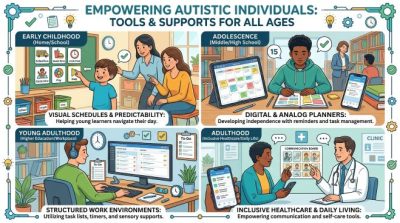 It can be difficult for young autistic children to shift from one activity to another, or complete multi-step instructions. These problems tend to be associated with the development of executive function skills and not lack of motivation.
This is a time when supportive tools and strategies can be used to bolster independence. Effective support enables people to concentrate on their strengths and to manage day-to-day tasks.
End Notes
For many people with autism, executive functioning difficulties play a significant part in their life. These challenges may manifest themselves in various aspects of planning, organizing, and completing tasks throughout life. This awareness fosters positive and inclusive learning spaces. There are even more effective methods that can be used to promote independence and success, which may be available through future research and awareness activities.